
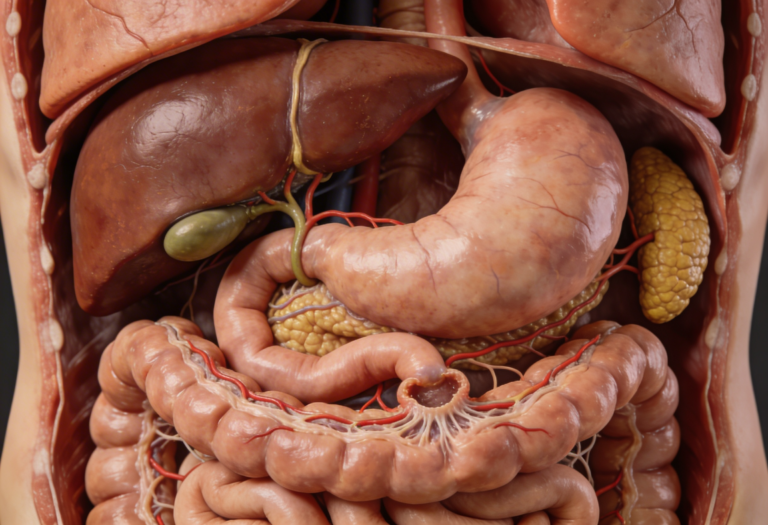
The small intestine is where most of the real work of digestion happens. While the stomach breaks food down, it is the small intestine that actually extracts nutrition from what you eat. More than 90% of all nutrients, vitamins, minerals, and fluids are absorbed here.
If this organ does not function properly, even a healthy diet cannot support your body. Problems in the small intestine can lead to fatigue, anemia, weight loss, bloating, vitamin deficiencies, and immune disturbances.
Digestive specialists – including teams working in advanced gut programs such as GutHealthDoctor under Dr. Gaurang Ramesh and gastroenterology departments at Arka Anugraha Hospital – often focus closely on small intestine health when patients present with unexplained digestive symptoms.
This guide explains the small intestine in simple language – how it works, what can go wrong, how it is tested, and how it is supported.
The small intestine is a long, coiled digestive organ located between the stomach and the large intestine. In a living person, it measures about 3 to 5 meters.
Its main roles are:
It is not just a food tube. It is also an immune organ and a hormone-signaling organ.
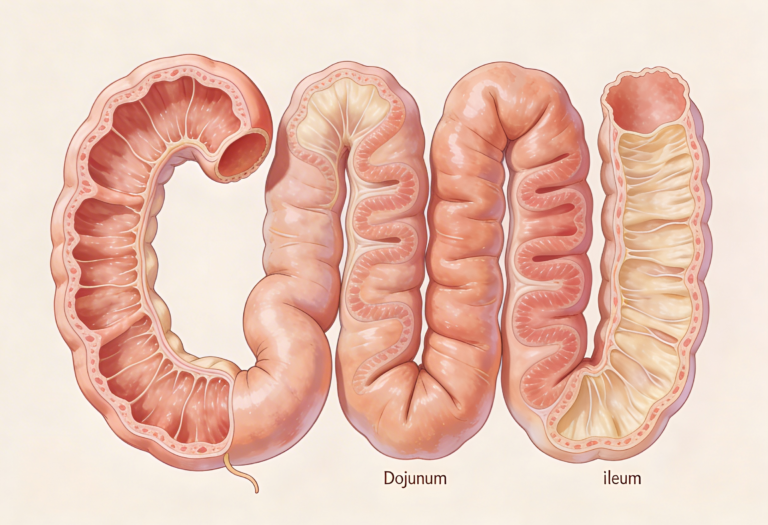
The first and shortest section. This is where:
The main absorption zone for:
It has thicker walls and more folds for absorption.
The final segment. It absorbs:
It also contains immune clusters called Peyer’s patches.
Damage to the ileum often leads to B12 deficiency, which is especially relevant in Indian vegetarian populations.
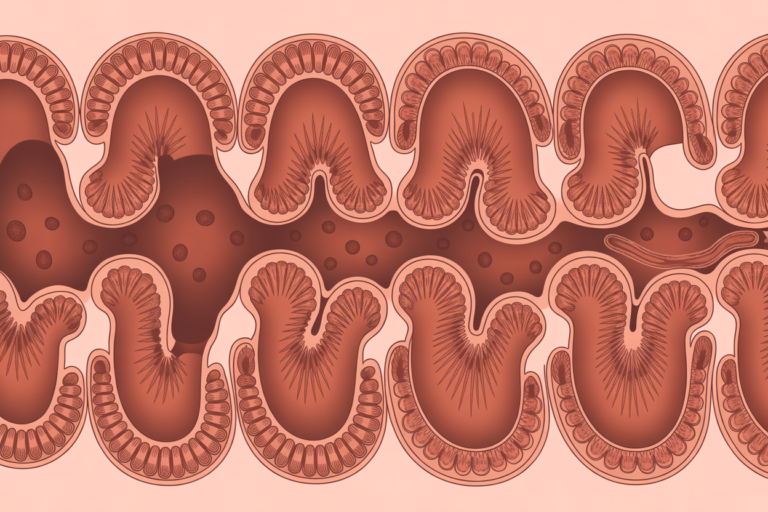
The inner surface is not smooth. It is built like a high-efficiency absorption system.
There are three levels of surface expansion:
Together, these increase the surface area up to hundreds of times — allowing efficient nutrient uptake.
Each villus contains:
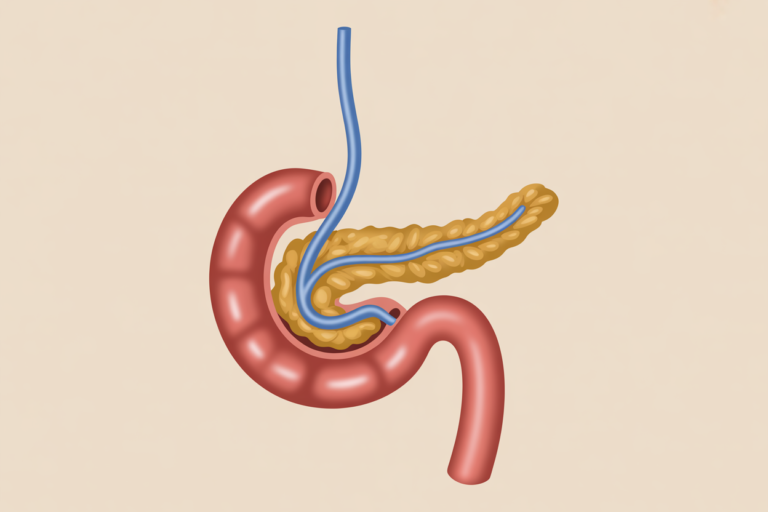
Digestion continues here using both movement and enzymes.
Two movement patterns occur:
Segmentation – mixes food back and forth to expose it to enzymes
Peristalsis – moves food forward
Between meals, a cleaning wave called the Migrating Motor Complex clears residue and excess bacteria.
Motility failure is a major contributor to SIBO.
Digestive secretions come from:
A large portion of the immune system lives here.
This includes:
The intestine must allow nutrients through while blocking microbes. This selective barrier is essential for preventing chronic inflammation.
Programs like GutHealthDoctor often evaluate barrier and immune interactions when patients have persistent gut symptoms.
India now shows a mixed pattern – traditional infections plus modern inflammatory disease.
Occurs when excess bacteria grow in the small intestine.
Symptoms:
Often diagnosed with hydrogen methane breath testing — available in specialized centers and used by clinicians like Dr. Gaurang Ramesh.
An immune reaction to gluten that damages villi.
Effects:
Requires biopsy and blood testing.
Crohn’s Disease
An inflammatory bowel disease affecting the small intestine — especially the ileum.
Can cause:
Requires imaging and endoscopic evaluation.
Require specialist care:
Standard endoscopy cannot see most of it. Advanced tools are used.
Used for:
Non-invasive and widely used in functional gut clinics.
A swallowable camera that records images throughout the small intestine.
Useful for:
Allows deep access for:
Available in advanced gastro centers.
Special MRI scan used for:
Treatment depends on cause – not just symptoms.
Consult if you have:
Structured evaluation programs such as those led by Dr. Gaurang Ramesh and hospital gastro teams at Arka Anugraha Hospital combine testing, nutrition, and medical therapy rather than symptom suppression alone.
What is the small intestine’s main job?
Digest and absorb nutrients.
How long does food stay there?
About 3–6 hours.
What is SIBO?
Bacterial overgrowth in the small intestine.
Why does SIBO cause bloating?
Bacterial fermentation produces gas.
Can stress affect it?
Yes, it slows motility and alters secretion.
Is capsule endoscopy painful?
No, it is swallowed like a pill.
Does Crohn’s affect small intestine?
Yes, commonly the ileum.
Can small intestine problems cause anemia?
Yes through nutrient malabsorption.
Lorem ipsum dolor sit amet, consectetur adipiscing elit.
Lorem ipsum dolor sit amet, consectetur adipiscing elit.
Lorem ipsum dolor sit amet, consectetur adipiscing elit.