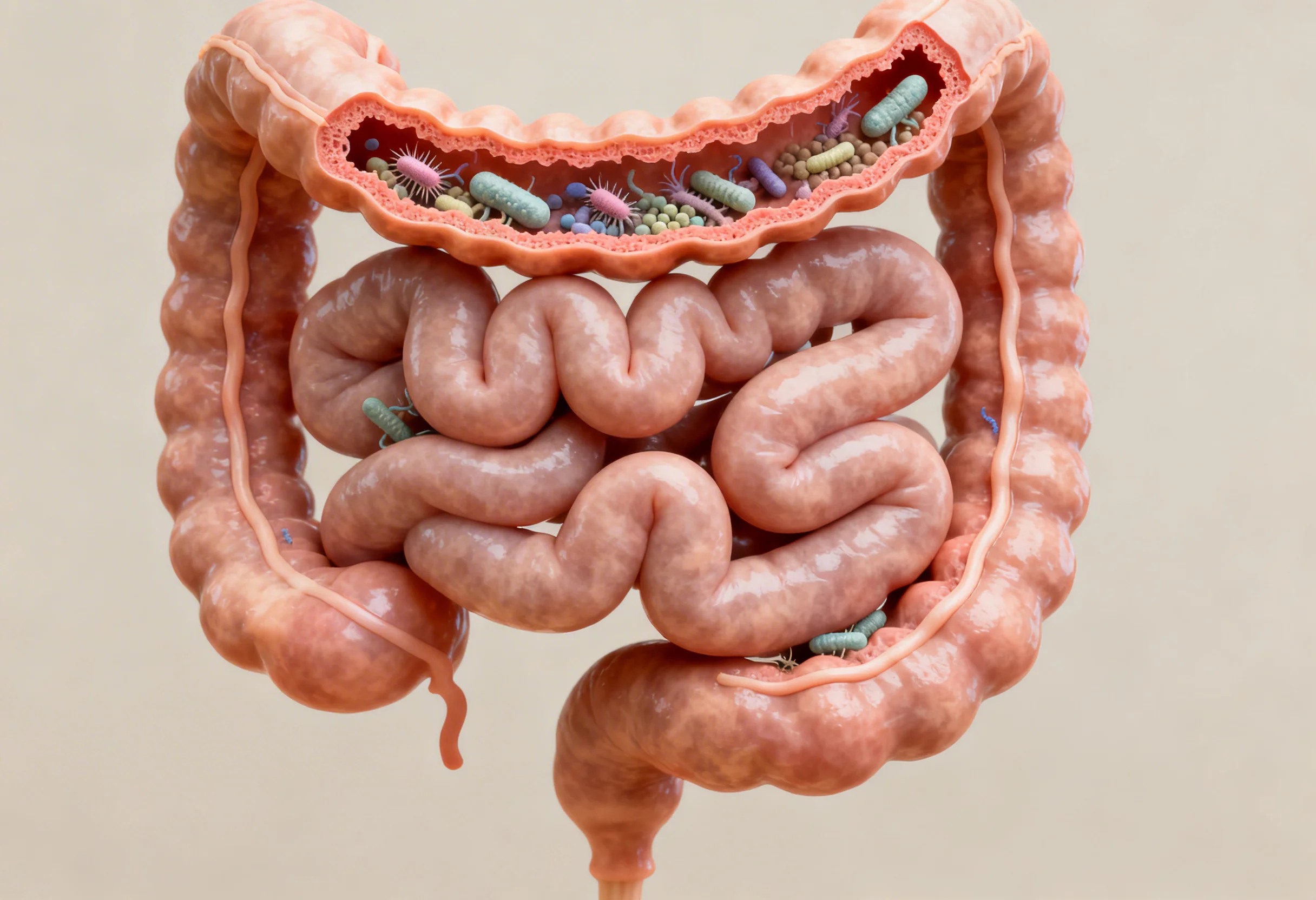
What Is SIBO? Understanding Small Intestinal Bacterial Overgrowth
Small Intestinal Bacterial Overgrowth, commonly called SIBO, is an increasingly recognized cause of chronic bloating, gas, abdominal discomfort, and unexplained digestive issues. Many patients in India are treated for acidity, IBS, or food intolerance for years without realizing that the real problem may be excessive bacteria in the small intestine.
SIBO occurs when bacteria that normally live in the large intestine overgrow in the small intestine, where bacterial counts should remain relatively low. This imbalance leads to premature fermentation of food, excessive gas production, nutrient malabsorption, and long-term gut dysfunction.
In cities like Bengaluru, SIBO is often underdiagnosed, particularly in patients who have persistent bloating despite dietary changes or long-term PPI use. Early identification and structured management can significantly improve outcomes.
What Is SIBO?
Under normal conditions, the small intestine contains relatively few bacteria compared to the colon. This allows nutrients to be absorbed efficiently without microbial competition.
SIBO develops when:
Bacterial populations exceed normal limits
Colon bacteria migrate upward
Motility mechanisms fail
Acid suppression reduces microbial defense
The result is excessive fermentation of carbohydrates in the small intestine rather than in the colon.
This leads to production of:
Hydrogen gas
Methane gas
Sometimes hydrogen sulfide
These gases cause bloating, distension, pain, and altered bowel habits.
Why the Small Intestine Normally Stays Protected
The body has several defense mechanisms to prevent bacterial overgrowth.
1. Gastric acid
Stomach acid sterilizes ingested microbes before they reach the small intestine.
2. Pancreatic enzymes and bile
These secretions have bacteriostatic properties.
3. Migrating Motor Complex (MMC)
This is a fasting motility pattern that sweeps residual food and bacteria downward.
4. Ileocecal valve
Prevents backflow of colon bacteria into the small intestine.
When these systems fail, bacterial overgrowth can occur.
Causes of Small Intestinal Bacterial Overgrowth
SIBO is rarely a primary condition. It is usually secondary to an underlying dysfunction.
1. Long-term Proton Pump Inhibitor Use
PPIs reduce stomach acid. Lower acid allows bacteria to survive and colonize the small intestine.
Studies show higher rates of positive hydrogen breath tests in long-term PPI users.
2. Diabetes and Neuropathy
Autonomic neuropathy can impair gut motility, leading to stagnation.
3. Hypothyroidism
Low thyroid hormone slows intestinal movement.
4. Vagus Nerve Dysfunction
The vagus nerve regulates gut motility. When compromised, the MMC weakens.
5. Structural Issues
Post-surgical blind loops
Small bowel strictures
Diverticula
Adhesions
6. Narcotic or Anticholinergic Medications
These medications slow gut transit time.
Types of SIBO
SIBO can be categorized based on gas production.
Hydrogen-dominant SIBO
More commonly associated with diarrhea.
Methane-dominant SIBO
Often linked with constipation. This is technically called Intestinal Methanogen Overgrowth, or IMO.
Diet should be phased and supervised, not permanently restrictive.
Recurrence and Motility Support
Recurrence is common if underlying motility dysfunction remains untreated.
Prokinetics may be prescribed to stimulate the MMC.
Meal spacing of 4 to 5 hours without snacking allows proper fasting motility waves.
Regular walking improves transit time.
When to See a Specialist
Consult a gastroenterologist if:
Bloating persists daily
IBS treatment fails
You use PPIs long term
You have diabetes with digestive symptoms
Nutrient deficiencies are unexplained
At Arka Anugraha Hospital in South Bengaluru, patients have access to advanced diagnostics and integrative evaluation for recurrent gut dysbiosis.
Early consultation improves long-term remission and reduces unnecessary medication cycles.
What to Expect During Consultation
During evaluation:
Detailed symptom mapping
Review of medications
Assessment of motility risk factors
Breath test planning
Nutritional deficiency screening
Dr. Gaurang Ramesh integrates conventional gastroenterology with functional gut assessment to identify both bacterial overgrowth and the underlying physiological trigger.
Long-Term Prevention
Maintaining gut balance involves:
Proper meal spacing
Avoiding unnecessary long-term PPIs
Managing thyroid and diabetes
Regular moderate exercise
Stress reduction to support vagal tone
Gradual reintroduction of diverse foods
SIBO is treatable, but prevention of recurrence depends on correcting the root cause.
Conclusion
Small Intestinal Bacterial Overgrowth is a common yet underrecognized cause of chronic bloating and digestive discomfort in India. It sits at the intersection of microbiome imbalance and motility dysfunction.
With proper breath testing, targeted antibiotic therapy, structured dietary modification, and root-cause correction, most patients experience significant improvement.
If you are struggling with persistent bloating gas issues or unexplained digestive symptoms, structured evaluation can provide clarity and relief.
FAQs
What exactly is SIBO? SIBO is bacterial overgrowth in the small intestine causing bloating, gas, and digestive symptoms.
How common is SIBO in India? It is common, especially in patients diagnosed with IBS.
Does SIBO cause constipation? Methane-dominant overgrowth is strongly linked to constipation.
Is the breath test accurate? It is non-invasive and widely used, but interpretation requires expertise.
Can SIBO be treated without antibiotics? In mild cases dietary management may help, but antibiotics are often required.
Why does SIBO return? Because underlying motility or structural issues remain untreated.
Are probiotics helpful? They may help after treatment but can worsen symptoms during active overgrowth.
8. Is SIBO permanent? No. With proper treatment and prevention strategies, it can be resolved.
Dr. Gaurang Ramesh
Surgical Gastroenterologist, Functional and Integrative Medicine Practitioner
Expert Landscapers
Lorem ipsum dolor sit amet, consectetur adipiscing elit.
Free Consultation
Lorem ipsum dolor sit amet, consectetur adipiscing elit.
Licensed Company
Lorem ipsum dolor sit amet, consectetur adipiscing elit.