What Is Digestion? A Simple Breakdown of How Food Moves Through Your Body
Digestion is the process by which your body breaks down the food you eat into nutrients that can be absorbed and used for energy, repair, and overall health. While many people think digestion happens only in the stomach, it is actually a coordinated, multi-organ process involving the mouth, food pipe, stomach, small intestine, large intestine, liver, pancreas, and gut bacteria.
When digestion works well, you feel light, energized, and regular. When it doesn’t, symptoms such as acidity, bloating, constipation, gas, or irregular bowel movements appear. Across urban India especially in cities like Bengaluru digestive complaints are now one of the most common reasons for doctor visits.
According to digestive health specialist Dr. Gaurang Ramesh at GutHealthDoctor, many chronic digestive symptoms are functional and treatable when evaluated properly instead of being repeatedly suppressed with over-the-counter medicines. Multispeciality centers such as Arka Multi-Speciality Hospital increasingly use structured diagnostic pathways to identify the real cause.
Let’s break digestion down step by step in simple terms.
What Is Digestion in Simple Terms?
Digestion is the biological breakdown of food into small molecules your body can absorb.
In practical terms:
Proteins → amino acids
Carbohydrates → simple sugars
Fats → fatty acids and glycerol
These nutrients then enter the bloodstream through the intestine and are delivered to cells.
If this breakdown or absorption fails, you may eat well but still develop nutrient deficiencies, fatigue, gut discomfort, or inflammation.
Where Does Digestion Happen?
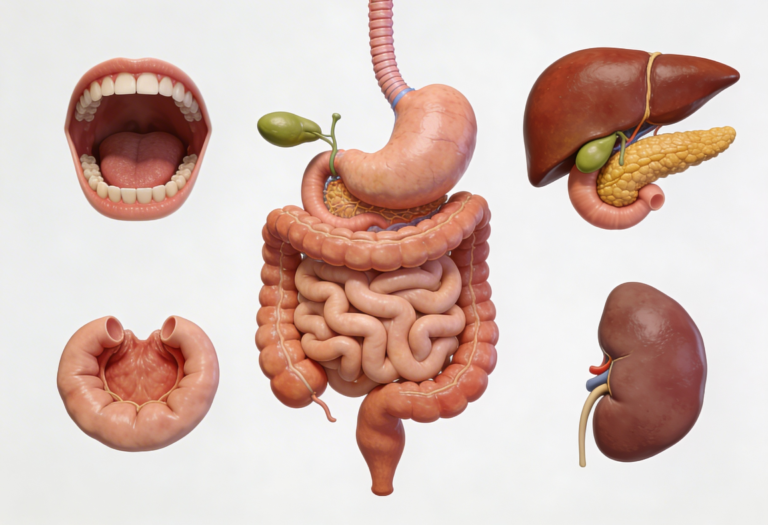
Digestion happens across the digestive tract, a long muscular tube running from mouth to anus.
Main digestive organs:
Mouth
Esophagus (food pipe)
Stomach
Small intestine
Large intestine (colon)
Rectum and anus
Supporting organs:
Liver – produces bile
Gallbladder – stores bile
Pancreas – releases digestive enzymes
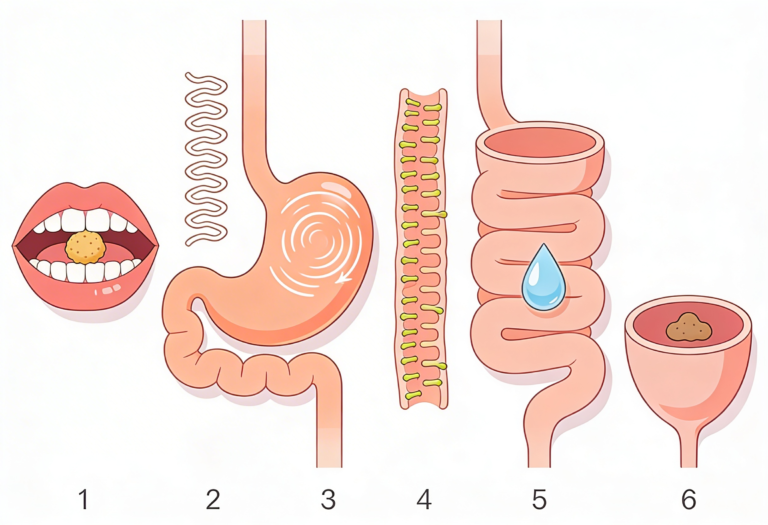
Each stage has a specific role.
Digestion Starts in the Brain - Before You Eat
Digestion begins even before the first bite. This is called the cephalic phase.
When you see or smell food:
Brain activates digestive nerves
Saliva increases
Stomach acid starts secreting
Enzyme production begins
Eating while stressed, distracted, or rushing reduces this preparation phase. This is one reason why fast, screen-time meals are linked with indigestion and bloating in working urban populations.
What Happens in the Mouth During Digestion?
The mouth performs both mechanical and chemical digestion.
Chewing (mechanical digestion)
Breaks food into smaller particles
Increases enzyme contact area
Reduces stomach workload
Saliva (chemical digestion)
Saliva contains:
Salivary amylase – begins starch digestion
Antibacterial factors
Lubrication for swallowing
Poor chewing is a surprisingly common cause of post-meal heaviness and gas.
What Does the Esophagus Do?
The esophagus is a muscular tube that moves food to the stomach using peristalsis – wave-like contractions.
At its lower end is the lower esophageal sphincter (LES).
If LES is weak:
Acid reflux and GERD occur.
If LES fails to relax:
Swallowing difficulty (achalasia) occurs.
Tests like esophageal manometry at Arka Anugraha Hospital – measure this muscle function precisely.
What Happens in the Stomach?
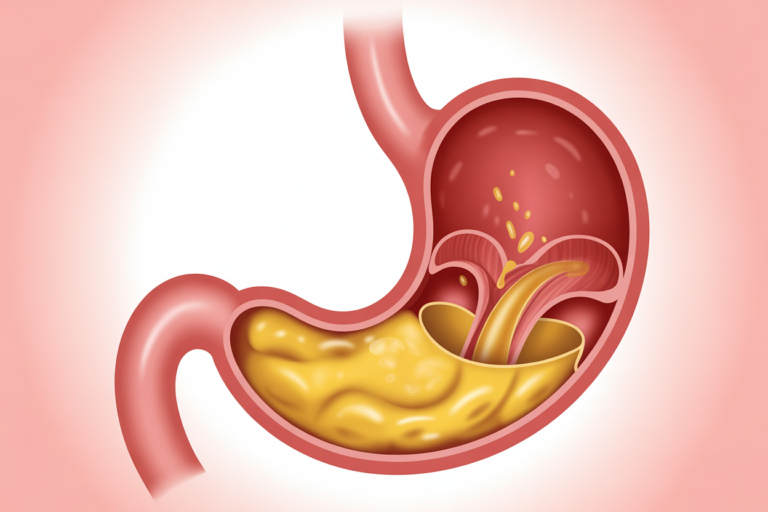
The stomach is a chemical digestion chamber and pathogen barrier.
It produces:
Hydrochloric acid – breaks proteins and kills microbes
Pepsin – protein-digesting enzyme
Intrinsic factor – needed for Vitamin B12 absorption
The stomach churns food into semi-liquid chyme.
When stomach function is impaired:
Protein digestion drops
Bloating increases
Infection risk rises
Nutrient absorption suffers
Both excess acid and insufficient acid can cause symptoms – which is why evaluation matters before long-term acid suppression.
Where Does Most Digestion and Absorption Occur?
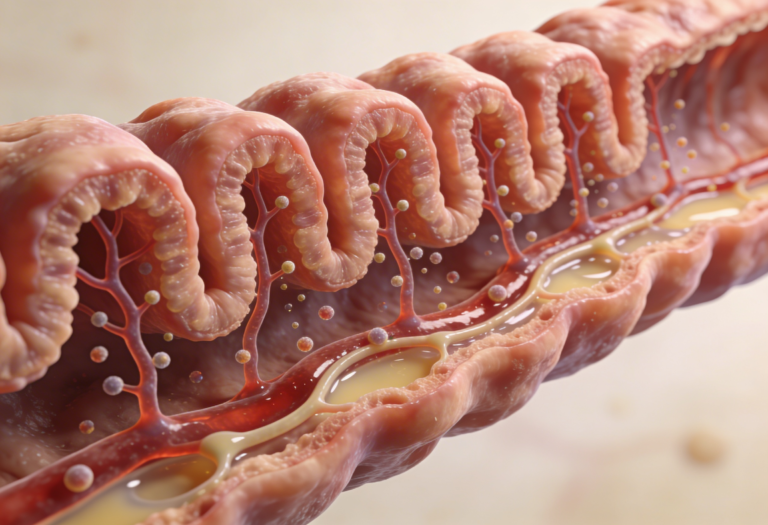
Most digestion and almost all nutrient absorption occur in the small intestine.
In the duodenum:
Stomach acid is neutralized
Pancreatic enzymes digest food
Bile breaks fats into tiny droplets
Pancreatic enzymes digest:
Proteins
Fats
Carbohydrates
In the jejunum and ileum:
Nutrients are absorbed through microscopic structures called villi.
Damage here – such as in celiac disease – causes malabsorption.
What Role Does the Large Intestine Play in Digestion?
The large intestine does not digest nutrients – it processes leftovers.
It:
Absorbs water
Balances electrolytes
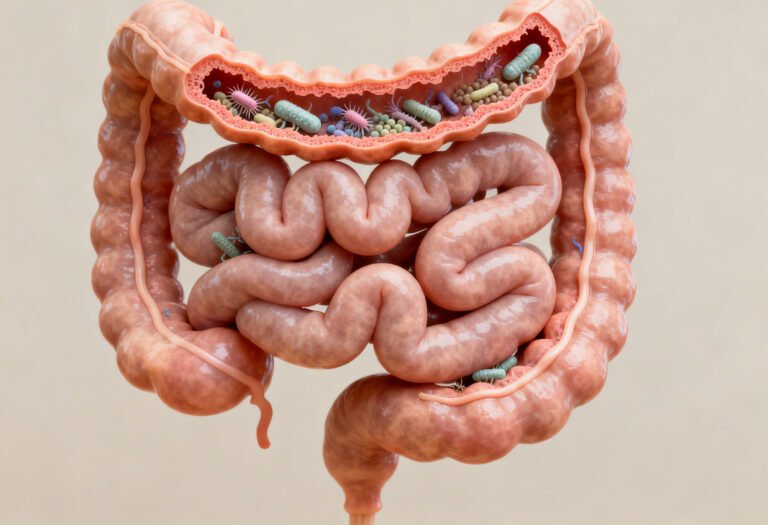
Houses gut bacteria
Ferments fiber
Forms stool
How Gut Bacteria Support Digestion
The colon contains trillions of microbes – the gut microbiome.
They help:
Ferment dietary fiber
Produce anti-inflammatory compounds
Support immunity
Influence bowel movement speed
Produce vitamins
Imbalance is linked to:
IBS
Chronic bloating
Constipation
Diarrhea
Food intolerance
Breath testing – used by digestive specialists including Dr. Gaurang Ramesh’s GutHealthDoctor program helps detect bacterial overgrowth patterns.
What Commonly Disrupts Digestion Today?
Modern digestive problems are often lifestyle driven.
Major causes:
Low fiber diets
Ultra-processed foods
Irregular meal timing
Late dinners
Chronic stress
Antibiotic overuse
Long-term acid suppressor use
Poor hydration
Low physical activity
Structured digestive programs at centers such as GutHealthDoctor and Arka Multi-Speciality Hospital increasingly focus on correcting these root drivers.
How Stress Disrupts Digestion
Stress directly alters digestive physiology through the gut-brain axis.
Stress hormones:
Reduce enzyme secretion
Change gut motility
Increase sensitivity
Alter microbiome balance
This is why IBS symptoms often worsen during stress. Yoga, breathing practices, and sleep regulation show measurable digestive benefits.
Common Digestive Symptoms
Frequently reported symptoms include:
Acidity
Heartburn
Bloating
Gas
Constipation
Loose stools
Abdominal cramps
Early fullness
Occasional symptoms are normal. Persistent symptoms are not.
Digestive Red Flag Symptoms
These require specialist evaluation:
Blood in stool
Black stools
Vomiting blood
Difficulty swallowing
Persistent vomiting
Unexplained weight loss
Night-time symptoms
New symptoms after age 50
Family history of colon cancer or IBD
These often require endoscopy or colonoscopy.
What Tests Diagnose Digestive Disorders?
Modern gastroenterology uses both structural and functional tests.
Structural tests
Endoscopy – examines esophagus and stomach Colonoscopy – examines colon
Advanced diagnostics are typically available through specialist digestive centers such as GutHealthDoctor and hospital gastro units like Arka Multi-Speciality Hospital.
How Digestive Disorders Are Treated
Treatment depends on the cause.
Medical therapy may include:
Acid regulators
Motility agents
Targeted antibiotics
Anti-inflammatory drugs
Enzyme support
Integrative digestive care may include:
Diet correction
Microbiome restoration
Stress regulation
Gut lining repair nutrients
If symptoms persist, structured evaluation is usually more effective than repeated self-medication.
Daily Habits That Improve Digestion
Evidence-based digestive habits:
Eat slowly
Chew thoroughly
Maintain meal timing
Increase fiber intake
Drink enough water
Include fermented foods
Stay active
Avoid heavy late dinners
Manage stress
Traditional Indian foods such as buttermilk, millets, lentils, and fermented batters support gut health.
When to See a Digestive Specialist
Seek specialist care if symptoms are:
Persistent
Recurrent
Worsening
Affecting quality of life
Early evaluation improves outcomes and reduces complications. Patients in Bengaluru and across India can access structured digestive evaluation through Dr. Gaurang Ramesh’s GutHealthDoctor program and gastroenterology teams at Arka Multi-Speciality Hospital.
FAQs
What is digestion?
Digestion is the process of breaking food into absorbable nutrients.
Where does digestion mostly occur?
In the small intestine.
Can stress cause indigestion?
Yes. Stress alters enzyme secretion and gut movement.
What causes bloating after meals?
Gas production, fermentation, or intolerance.
Is acidity the same as indigestion?
No. Acidity is acid excess; indigestion is broader discomfort.
What is SIBO?
Bacterial overgrowth in the small intestine.
Does fiber improve digestion?
Yes. It supports motility and gut bacteria.
When should I see a gastroenterologist?
If symptoms persist or red flags appear.
Dr. Gaurang Ramesh
Surgical Gastroenterologist, Functional and Integrative Medicine Practitioner
Expert Landscapers
Lorem ipsum dolor sit amet, consectetur adipiscing elit.
Free Consultation
Lorem ipsum dolor sit amet, consectetur adipiscing elit.
Licensed Company
Lorem ipsum dolor sit amet, consectetur adipiscing elit.